English
33213-20050
for Toyota Scion xA xB xD
0.3kgs
| Availability: | |
|---|---|
| Quantity: | |
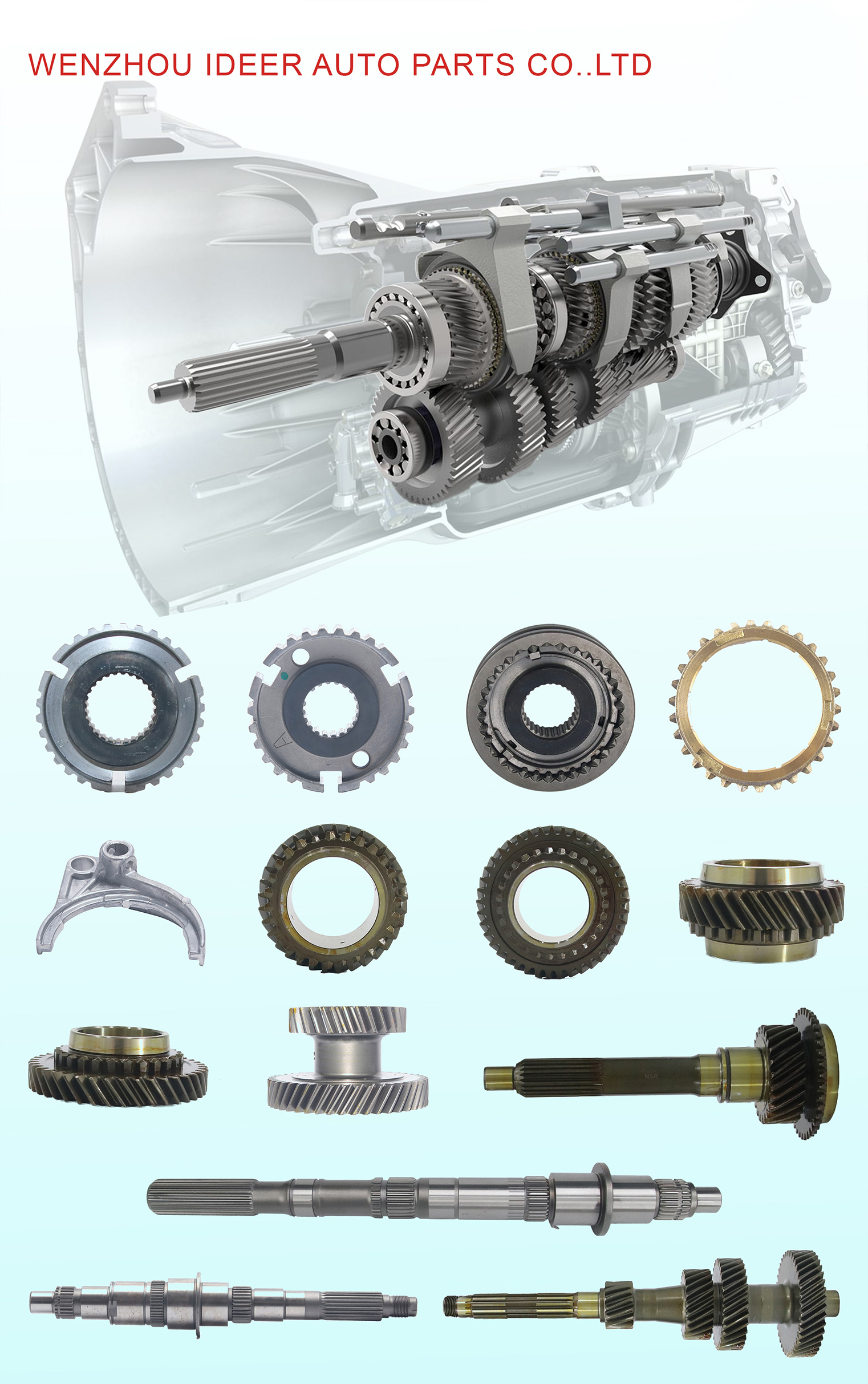
The No.2 Gear Shift Fork is an essential precision component engineered for manual and automated manual transmissions (AMTs). As a core actuator in the transmission system, it physically engages or disengages specific gears to transmit power and define driving ratios. Crafted from high-grade materials like low-carbon alloy steel, medium-carbon structural steel, or high-strength aluminum alloy, this shift fork features precision-machined prongs that seamlessly fit into the grooves of synchronizer sleeves or sliding gears.
When the driver operates the shift lever, motion is transferred through shift rails to the No.2 Gear Shift Fork, which axially slides the synchronizer assembly. This critical action locks the target gear to the output shaft, delivering smooth, quick, and accurate gear changes. Its dimensional accuracy, material durability, and surface treatment quality directly prevent accidental disengagement under load, ensure long-term reliability, and enhance overall driving control. Specifically optimized for Japanese and Korean vehicle models, it serves as a premium replacement part for passenger cars, light commercial vehicles, and medium-duty engineering vehicles, perfectly matching original equipment (OE) specifications for seamless installation.
OE-Matched Dimensional Accuracy: Manufactured strictly per original vehicle dimensions and OE standards, ensuring 100% fitment for direct replacement without modification. Eliminates the risk of misalignment, gear clash, or shifting failure during installation.
12-Month Comprehensive Warranty: Backed by a 12-month quality warranty from the date of customer receipt. Covers manufacturing defects and provides professional after-sales support to resolve usage issues, ensuring long-term peace of mind.
Flexible Order Quantities: Accepts small-batch orders (retail orders excluded), catering to auto parts distributors, repair workshops, and B2B partners. Supports flexible minimum order quantities (MOQs) to adapt to different business scales and inventory needs.
Targeted Model Compatibility: Specializes in Japanese and Korean vehicle models, including Toyota, Mazda, Isuzu, Mitsubishi, Hyundai, Kia, and more. In-depth understanding of local vehicle transmission systems ensures precise matching and superior performance.
Customizable Packaging Solutions: Offers tailored packaging services, including logo printing, customized labeling, and branded box design. Enhances brand visibility for distributors and improves customer presentation for B2B transactions
Application Field | Drive Method | Core Demand | Typical Material |
Consumer MT | Human (Cable/Linkage) | Low Cost, Clear Feel, Durability | Stamped Steel, Ductile Iron |
AMT / Auto Trucks | Electric/Hydraulic Actuators | Control Precision, Speed, Automation | High-Strength Steel, Aluminum Alloy |
Racing / Moto | Mechanical Cam/Drum | Extreme Lightweight, Impact Resistance, Speed | CNC Aluminum, Titanium |
Construction Mach. | Direct Hydraulic Drive | High Torque Capacity, Harsh Environment Adaptability | Alloy Steel (Surface Hardened) |
Material Specifications
We offer four main material types for the No.2 Gear Shift Fork, each tailored to specific application scenarios with unique core advantages.
The first is Low-Carbon Alloy Steel, available in grades SAE 8620 (20CrMnTi) and SAE 4120, which is ideal for carburizing treatment and suitable for high-demand passenger cars and heavy-load scenarios; it achieves a tough core and ultra-hard surface, resisting high impact and wear during frequent gear changes.
Next is Medium-Carbon Structural Steel, with grades SAE 1045 (45#) and SAE 4140, suitable for induction hardening and used in light-duty vehicles, commercial vans, and urban logistics cars; it is cost-effective with stable performance, balancing durability and economic efficiency for daily-use vehicles.
High-Strength Aluminum Alloy, in grades 7075-T6 and 6061-T6, is reserved for racing cars and ultra-lightweight modified vehicles; its ultra-lightweight design reduces transmission load, though it requires hard anodizing or coatings to enhance wear and corrosion resistance.
Finally, Powder Metallurgy (PM), specifically iron-based PM, is ideal for high-volume passenger car applications and compact transmissions; it is suitable for complex shape production with low cost and can be oil-impregnated for self-lubrication, reducing maintenance frequency.
Heat Treatment & Surface Finish
Carburizing & Hardening (Applicable to Low-Carbon Alloy Steel Forks)
Surface Hardness: 58 – 64 HRC (for contact surfaces and fork fingers) – ensures extreme wear resistance under high friction.
Core Hardness: 30 – 45 HRC – maintains impact toughness to prevent cracking during heavy-load gear changes.
Effective Case Depth (ECD): 0.6 mm – 1.2 mm (adjustable based on gear module and load capacity) – optimizes durability and service life for different vehicle models.
Induction Hardening (Applicable to Medium-Carbon Steel Forks)
Hardness: 50 – 58 HRC (limited to key contact areas) – focuses wear resistance on high-stress regions.
Characteristics: Minimal thermal distortion, high processing efficiency, and shallow case depth – suitable for mass production of light-duty vehicle parts.
Surface Treatments
Phosphating: Provides black or gray phosphate coating. Improves initial running-in performance, accelerates adaptation to working conditions, and enhances rust/corrosion resistance in harsh environments.
Additional Notes
Compatibility Confirmation: This No.2 Gear Shift Fork is designed for Japanese and Korean vehicle models. Please verify your vehicle model, original part number, and transmission type before ordering to ensure a perfect fit.
Installation Guidance: Professional installation by certified technicians is recommended. Incorrect installation (e.g., misaligned shift rails, improper torque) may cause shifting jams or premature wear.
Storage Requirements: Store in a dry, ventilated environment to avoid rust or corrosion. Keep away from moisture and corrosive substances to maintain material performance.
Lubrication Maintenance: Regularly lubricate the transmission system with OE-specified lubricants during use to extend the service life of the gear shift fork and related components.
Precision Manufacturing & Quality Control: Adopts advanced CNC machining and precision testing equipment to ensure dimensional accuracy within 0.01mm tolerance. Each fork undergoes strict hardness, wear resistance, and fatigue testing to meet or exceed OE standards, guaranteeing stable performance in long-term use.
Material Innovation for Diverse Needs: Offers a full range of material options (alloy steel, carbon steel, aluminum alloy, PM) to match different vehicle types and usage scenarios. Customizable material and treatment solutions meet the demands of daily commuter vehicles, heavy-load commercial vehicles, and high-performance racing cars.
Expertise in Japanese & Korean Models: Years of focus on Japanese and Korean vehicle transmission systems, with a dedicated database of part models and parameters. Ensures 100% compatibility with mainstream brands like Toyota, Hyundai, and Mitsubishi, avoiding the risk of mismatched parts.
Cost-Effective B2B Solutions: Small-batch order support reduces inventory pressure for distributors; cost-effective material options (e.g., medium-carbon steel) lower procurement costs without sacrificing quality. Customizable packaging also helps build brand competitiveness in the aftermarket.
Reliable After-Sales Service: 12-month warranty and professional technical support team provide timely solutions to product usage, installation, and compatibility issues. Long-term supply of spare parts ensures continuous support for business partners.
Choose our No.2 Gear Shift Fork for precise fit, durable performance, and comprehensive B2B support—your ideal partner for auto parts procurement in the Japanese and Korean vehicle aftermarket.
Rear-end vibration during acceleration is not automatically a differential failure. It is often external to the axle assembly: tires, wheel balance, U-joints, driveshaft angle, center support bearings, yokes, mounts, or driveshaft balance. A true rear differential problem becomes more likely when th
A rear differential leak should be treated as a high-priority fault because the axle housing holds far less lubricant than an engine or transmission. A damp cover can become low gear oil, bearing heat, gear whine, and a costly rebuild if the source is missed. Most leaks still do not require a comple
No. Not every car has a separate rear differential. Most rear-wheel-drive, all-wheel-drive, and four-wheel-drive vehicles do. Most front-wheel-drive cars use a front transaxle that contains the differential function inside the transmission. That distinction matters because many ordering mistakes sta
A front-end grinding, scraping, rumbling, whirring, or howling noise can point to internal front differential damage, but it is often misdiagnosed as a wheel bearing, CV axle, brake issue, transfer case problem, tire noise, or front driveshaft fault. The sound alone does not prove the failed part. T
Many owners know a vehicle is “4WD” or “AWD” yet cannot separate the front differential, rear differential, center differential, transfer case, axle lockers, and electronic traction control. That confusion matters because each component solves a different traction problem. At axle level, the Front D
Many 4WD owners notice the front axle only after noise, leaks, steering bind, failed engagement, vibration, poor fuel economy, or a large repair quote. A front differential is the gear assembly that sends torque to the two front wheels. It also lets those wheels rotate at different speeds during tur
Traction loss during towing or mild off-road driving usually starts in the axle, not at the engine. A factory open Differential allows the left and right wheels to turn at different speeds, which is ideal in normal corners. Under load, however, it also sends torque to the wheel with the least resist
The “Positraction” scene in My Cousin Vinny made a real drivetrain issue famous. A standard Differential is necessary because the left and right wheels must rotate at different speeds in a turn. Its weakness appears when one driven tire loses grip. The slipping wheel sets the torque limit, so the ti
Choosing the right axle gearing is a fitment and drivability decision, not a parts-catalog guess. The correct Differential must match tire diameter, transmission ratios, engine powerband, axle housing, and the vehicle’s real workload. A poor match can cause slow acceleration, gear hunting, excess cr
A car differential works by transmitting engine or motor torque to two drive wheels while allowing those wheels to rotate at different speeds. That speed difference is essential in a turn because the outside wheel travels a longer path than the inside wheel. Without a differential, the axle would bi
A Hot Wheels car with a solid rear axle runs well in a straight line, then fights the track in every corner. A real vehicle faces the same problem. In a turn, the outside drive wheel travels farther than the inside drive wheel, so both wheels cannot rotate at the same speed without slipping. That is
In the realm of automotive engineering, few systems play as pivotal a role as the transmission. This complex network of components is the silent architect behind the seamless transfer of power from the engine to the road.
Aimiky Established in 2013, which is a professional manufacturer and exporter that is concerned with the design, development and production of auto parts. We are located in Wenzhou, with convenient transportation access. All of our products comply with international quality standards and are greatly
