


Manual Transmission Pops Out of Gear: Causes and Parts to Inspect
Views: 0 Author: Site Editor Publish Time: 2026-10-15 Origin: Site


When a manual transmission pops out of gear, the shift lever unexpectedly returns toward neutral during acceleration, deceleration, or normal driving. This problem may result from worn internal transmission parts, damaged shift linkages, or incomplete gear engagement.
A gearbox that repeatedly jumps out of gear can also suffer additional damage if the problem is ignored.
In this guide, we explain the common causes, the parts technicians should inspect, and how to choose suitable transmission replacement components.
What Does It Mean When a Manual Transmission Pops Out of Gear?
In a manual gearbox, the synchronizer sleeve engages the selected gear through mating engagement teeth. The shift mechanism positions the sleeve, while the gear and associated components must maintain engagement under changing loads.
When the transmission cannot maintain this connection, the sleeve may disengage and the gear selector can move back toward neutral.
Common Symptoms of Gear Disengagement
Typical warning signs include:
The gear lever unexpectedly moves toward neutral.
One specific gear repeatedly disengages.
The problem occurs during acceleration or engine braking.
Gear engagement feels incomplete or unusually loose.
Grinding or mechanical noise accompanies shifting.
Important: A transmission that pops out of gear should be inspected promptly. Unexpected disengagement can interrupt power delivery and may worsen internal wear.
Main Causes of a Manual Transmission Popping Out of Gear
Several mechanical problems can prevent a transmission from remaining securely engaged. Some involve external components, while others require internal gearbox inspection.
1. Worn Synchronizer Sleeve and Hub
The synchronizer sleeve slides along the hub and engages the selected gear.
If its engagement teeth become rounded, chipped, or excessively worn, the sleeve may not remain securely engaged under torque changes.
The hub and mating splines should also be inspected for damage, abnormal clearance, or deformation.
2. Damaged Gear Engagement Teeth
Transmission gear engagement teeth, sometimes called dog teeth, help the synchronizer sleeve lock the selected gear to the shaft.
Repeated grinding, incomplete engagement, or prolonged wear can damage their original geometry.
When the mating teeth can no longer maintain engagement, the transmission may jump out of gear during acceleration or deceleration.
Explore our Transmission Gear Products for gearbox replacement applications.
3. Worn or Bent Shift Fork
A shift fork moves the synchronizer sleeve into the selected gear position.
Excessive fork wear, deformation, or damaged contact surfaces can prevent the sleeve from reaching its intended engagement position.
This may cause incomplete gear selection, abnormal shifting resistance, or repeated disengagement.
4. Weak Detent Springs or Damaged Shift Rails
Transmission detent mechanisms help maintain the selected shift position.
Worn detent components, damaged shift rails, or weak springs may allow unwanted movement of the shifting mechanism.
These parts should be inspected when the transmission repeatedly disengages despite apparently normal gear selection.
5. Shift Linkage or Bushing Problems
External shift cables, rods, and bushings connect the gear selector to the transmission.
When these components become worn or misadjusted, the selected gear may not engage completely.
Loose or inaccurate gear selection is an important warning sign of possible linkage problems.
6. Bearing Wear and Excessive Shaft Movement
Transmission bearings support the shafts and help maintain proper alignment.
Severe bearing wear or excessive shaft endplay can affect gear positioning and engagement.
Additional symptoms may include whining, vibration, or abnormal transmission noise.
7. Damaged Engine or Transmission Mounts
Excessive drivetrain movement from worn mounts can place additional stress on the shift linkage.
In some vehicles, this movement may interfere with gear engagement, particularly when engine load changes.
Mount condition should therefore be checked before disassembling the transmission.
Why Does a Manual Transmission Pop Out During Acceleration or Deceleration?
The timing of gear disengagement can help identify potential causes.
Pops Out of Gear When Accelerating
Under acceleration, increasing torque places load on the transmission engagement components.
If gear teeth, synchronizer sleeves, or related parts are worn, the selected gear may disengage.
Excessive drivetrain movement or incomplete linkage travel can also contribute.
Pops Out of Gear When Decelerating
During engine braking, the direction of torque loading changes.
Worn engagement teeth, excessive shaft movement, or damaged shift mechanisms may allow a gear to disengage during this load reversal.
Pops Out of Only One Gear
If the problem consistently affects second, third, or fifth gear, technicians should inspect components associated with that specific gear position.
However, a gear-specific symptom does not automatically confirm synchronizer ring failure.
Gear Disengagement Diagnosis Table
| Symptom | Possible Cause | Parts to Inspect |
|---|---|---|
| Pops out during acceleration | Worn engagement components | Gear teeth, sleeve, hub |
| Pops out during deceleration | Engagement wear or shaft movement | Gear teeth, bearings, shaft |
| Only one gear disengages | Localized engagement problem | Sleeve, fork, gear |
| Several gears disengage | Linkage or broader internal fault | Shift linkage, detents, bearings |
| Loose gear selector | Worn external shifting components | Cables, bushings, shift lever |
| Grinding before disengagement | Synchronization or engagement damage | Synchronizer ring, sleeve, gear cone |
The table provides diagnostic starting points rather than definitive fault identification.
Synchronizer Ring vs. Synchronizer Sleeve: Which Causes Gear Pop-Out?
These components work together, but they perform different functions.
Synchronizer Ring: Matching Gear Speeds
The synchronizer ring, also called a blocker ring, uses friction to help match rotational speeds before gear engagement.
When worn, it commonly causes grinding, difficult shifting, or delayed engagement.
Explore our Synchronizer Ring Products for manual gearbox repair applications.
Synchronizer Sleeve: Maintaining Gear Engagement
The synchronizer sleeve provides mechanical engagement between the hub and the selected gear.
Damage to the sleeve or mating gear teeth can directly affect the transmission's ability to remain in gear.
| Component | Main Function | Common Failure Symptom |
|---|---|---|
| Synchronizer Ring | Matches rotational speeds | Grinding or hard shifting |
| Synchronizer Sleeve | Engages selected gear | Incomplete engagement or pop-out |
| Synchronizer Hub | Supports sleeve and transfers torque | Engagement problems |
| Gear Engagement Teeth | Maintain mechanical engagement | Gear disengagement |
| Shift Fork | Positions synchronizer sleeve | Incomplete gear selection |
Key distinction: Replacing a worn synchronizer ring alone may not resolve a gear pop-out problem if the sleeve, gear teeth, or shift mechanism are damaged.
How to Diagnose a Manual Transmission That Pops Out of Gear
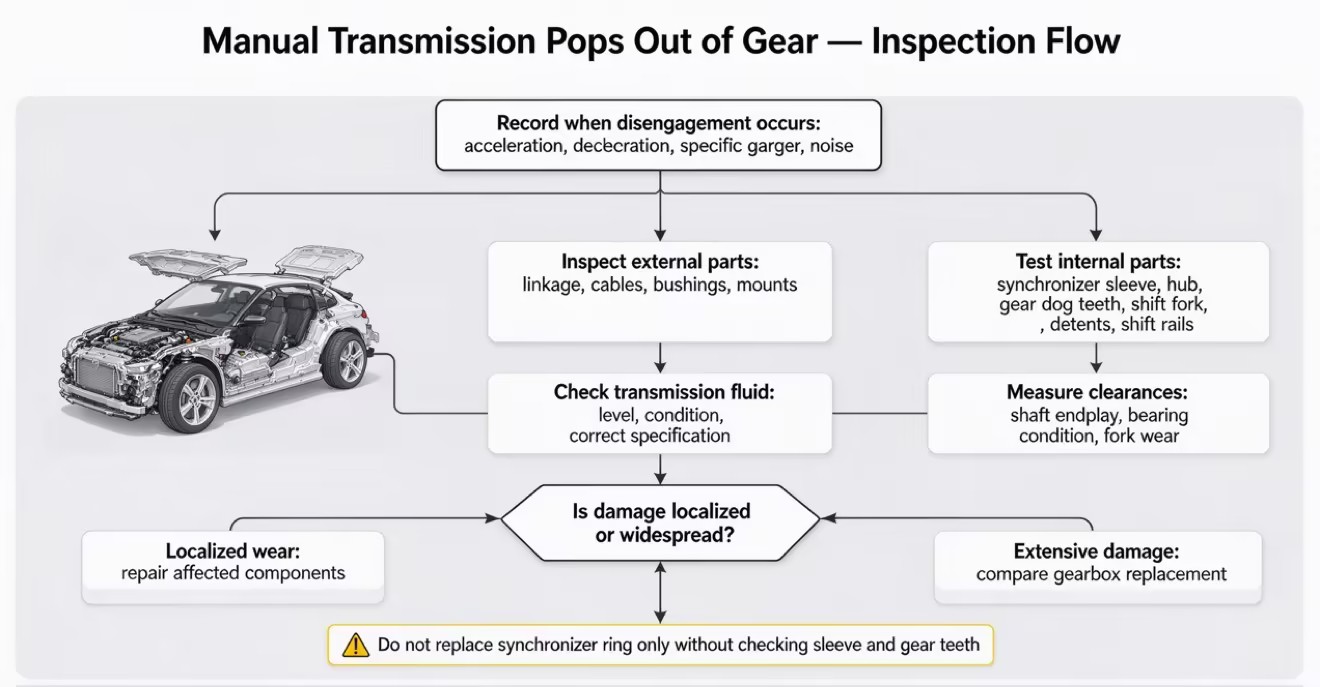
Before replacing internal components, technicians should identify when disengagement occurs and inspect accessible parts.
Step 1: Record the Symptoms
Determine which gear disengages and whether the problem occurs during acceleration, deceleration, or other operating conditions.
Record any associated grinding, vibration, or abnormal transmission noise.
Step 2: Inspect External Shift Components
With the vehicle safely secured and the engine off, inspect the shift linkage, cables, bushings, and visible mounting components.
Check for excessive play, damage, or incorrect adjustment according to the vehicle service manual.
Step 3: Check Transmission Fluid
Verify the lubricant level, condition, and manufacturer-specified fluid type.
Low or contaminated fluid may contribute to wear and shifting problems. However, a fluid change cannot repair damaged engagement teeth.
Step 4: Inspect Internal Components
If external checks do not identify the problem, a qualified technician may need to inspect the gearbox internally.
Important components include:
Synchronizer rings, hubs, and sleeves.
Gear engagement teeth.
Shift forks and detent mechanisms.
Shaft bearings and related clearances.
Measurements should follow the relevant manufacturer's service specifications.
Step 5: Confirm the Required Repairs
Replacement decisions should be based on component condition, compatibility, and the extent of internal damage.
Avoid replacing synchronizer rings solely because the transmission jumps out of gear.
Repair Options: Replace Individual Parts or the Complete Gearbox?
The appropriate repair depends on the severity of damage, replacement part availability, and labor requirements.
| Repair Option | Suitable Situation | Main Consideration |
|---|---|---|
| Linkage Adjustment or Repair | External shifting problem | Usually avoids gearbox disassembly |
| Synchronizer Component Replacement | Confirmed localized wear | Requires compatible components |
| Gear or Shift Fork Replacement | Damaged engagement components | May require gearbox teardown |
| Complete Gearbox Replacement | Extensive internal damage | Compare total costs and availability |
For broader repair requirements, explore our Transmission Parts, including gearbox and gear-related components.
How to Choose the Right Manual Transmission Replacement Parts
Correct part identification is essential for transmission repairs.
Before ordering, verify the following information:
OE Part Number: Match the original equipment reference.
Transmission Model: Confirm the gearbox designation.
Gear Position: Identify the affected gear and component location.
Dimensions and Splines: Verify compatibility with mating components.
Material and Design: Match the required synchronizer or gear specifications.
Repair Scope: Identify all worn mating parts before assembly.
For example, Aimiky's synchronizer ring range includes vehicle-specific replacement references, such as the Hyundai 43350-02502 synchronizer ring. Buyers should confirm fitment against the applicable transmission specification.
Providing accurate OE numbers and gearbox information helps suppliers identify appropriate components and reduces ordering errors.
Conclusion
A manual transmission that pops out of gear may have worn engagement teeth, a damaged synchronizer sleeve, shift fork problems, defective detents, or external linkage issues.
Although synchronizer ring wear commonly causes grinding and difficult shifting, it is not always the direct cause of gear disengagement.
Accurate diagnosis should begin with external components before progressing to internal gearbox inspection.
At Wenzhou Ideer Auto Parts, we supply transmission-related replacement parts for automotive repair and aftermarket applications.
Contact our team with your OE number and transmission model to discuss suitable replacement components.
F AQ
Why does my manual transmission keep popping out of gear?
Common causes include worn gear engagement teeth, damaged synchronizer sleeves, shift fork problems, weak detents, linkage misadjustment, and excessive shaft movement.
Can a bad synchronizer ring cause a transmission to pop out of gear?
A worn synchronizer ring primarily affects speed matching during shifts. Repeated grinding may contribute to engagement component damage, but the ring itself is not necessarily the direct cause of gear pop-out.
Why does my manual transmission pop out of second gear?
Possible causes include worn second-gear engagement teeth, a damaged synchronizer sleeve, shift fork wear, or incomplete linkage travel. Diagnosis should focus on the affected gear assembly.
Can low transmission fluid cause gears to pop out?
Low fluid levels may accelerate component wear and contribute to gearbox problems. However, persistent disengagement usually requires inspection of the mechanical engagement system.
Is it safe to drive when a manual transmission pops out of gear?
Repeated unexpected disengagement can interrupt power delivery and worsen damage. Stop driving when safe and arrange a professional inspection rather than continuing normal operation.
Do I need to replace the entire transmission?
Not always. Localized problems may be repaired with individual components. A complete gearbox replacement may be more economical when extensive internal damage is present.


