


Bad Synchronizer Ring Symptoms: Gear Grinding and Difficult Shifting Explained
Views: 0 Author: Site Editor Publish Time: 2026-10-15 Origin: Site


A healthy manual transmission relies on precise friction and timing to keep your vehicle moving smoothly. When gear shifts transition from seamless to resistant or noisy, it signals a fundamental mechanical breakdown inside the gearbox. Misdiagnosing these transmission issues often leads to premature clutch replacements. Conversely, ignoring the root cause until catastrophic gear failure occurs necessitates a complete transmission replacement. Shop technicians see this constantly: a driver ignores a slight crunch in second gear, and months later, the entire main shaft is destroyed. You need to catch these warning signs early. This guide breaks down how to accurately identify bad synchronizer ring symptoms, differentiate them from adjacent driveline failures, and evaluate the most effective repair or rebuild strategies. We will look at the exact mechanical failures happening under the case and how to test for them in the driveway.
The three definitive signs of synchronizer failure are audible grinding during shifts, physical resistance when entering a gear, and the transmission unexpectedly popping into neutral.
Before committing to a costly transmission teardown, operators must rule out clutch drag, incorrect fluid viscosity, and worn shift linkages.
Bypassing the synchronizer ring via double-clutching can serve as a highly effective diagnostic test to confirm internal wear.
Deferred maintenance on a failing synchronizer ring exponentially increases repair costs by causing collateral damage to gear teeth, dog collars, and shift forks.
Decision-makers must weigh the high labor costs of a targeted transmission rebuild against the predictable downtime of installing a remanufactured unit.
How Synchronizer Rings Work and Why They Fail
Synchronizer rings help match rotational speeds inside manual transmissions, allowing gears to engage smoothly. Over time, friction surface wear, unsuitable lubrication, or aggressive shifting can reduce synchronization efficiency and cause gear engagement problems.
The Role of the Synchronizer Ring in Speed Matching
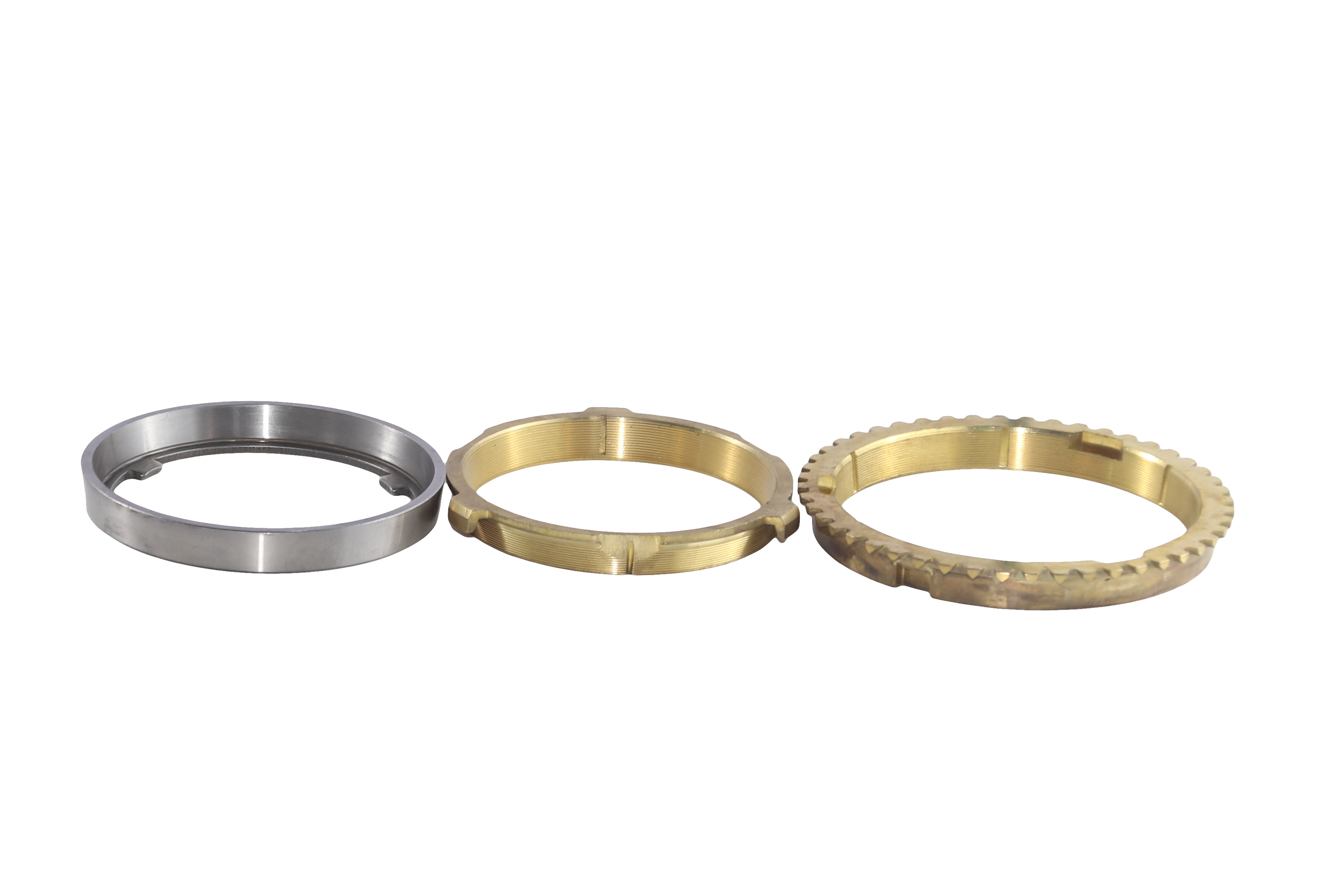
A synchronizer ring, also called a blocker ring, uses friction against the gear cone to reduce speed differences before the synchronizer sleeve engages the selected gear.
When the ring becomes worn, synchronization may take longer, potentially causing hard shifting or gear grinding.
Explore our Synchronizer Ring Products for compatible manual transmission replacement parts.
Root Causes of Premature Wear and Failure
Several factors can contribute to premature synchronizer ring failure:
Aggressive Shifting: Excessive shifting force or incomplete clutch disengagement increases component stress.
Incorrect Transmission Fluid: Unsuitable lubricant viscosity or friction characteristics can affect synchronization.
Friction Surface Wear: Repeated operation gradually wears the ring's friction surface.
Component Misalignment: Damaged gear cones or associated synchronizer parts can accelerate wear.
Regular transmission maintenance and correct lubricant selection help reduce unnecessary wear.
Visual Check: New vs Worn Synchronizer Rings
Inspecting the friction surface, engagement teeth, and ring clearance helps technicians identify possible synchronizer wear.

Important: Synchronizer ring clearance varies by transmission model. Always compare measurements with the relevant service manual rather than using one universal tolerance.
Key Warning Signs of a Failed Synchronizer Ring
Worn synchronizer rings may cause gear grinding, difficult shifting, or delayed engagement. However, similar symptoms can also result from clutch problems, damaged shift linkage, or other transmission components.
Audible Gear Grinding and Crunching
Gear grinding during shifting is a common warning sign of possible synchronizer wear.
When the ring cannot equalize rotational speeds effectively, the engagement teeth may clash, creating a grinding or crunching noise.
Persistent grinding should be investigated promptly to reduce the risk of additional gear damage.
Stubborn or Difficult Gear Changes (Wall Resistance)
A worn transmission synchronizer ring may cause resistance when shifting into a particular gear.
Other possible causes include incorrect transmission fluid, clutch drag, or shift linkage problems.
Technicians should inspect both external shifting components and internal synchronizer condition before recommending replacement.
Gears Unexpectedly Popping Out of Gear
Gears popping out of engagement may indicate worn engagement teeth, synchronizer sleeve damage, shift fork problems, or other internal transmission faults.
Although prolonged synchronizer problems can contribute to additional wear, gear disengagement does not automatically mean the synchronizer ring itself has failed.
A complete inspection is necessary to identify the damaged components and determine the appropriate repair.
Quick Diagnosis: Synchronizer Ring Failure Symptoms
Symptom | Possible Cause | Recommended Inspection |
|---|---|---|
Grinding in one gear | Synchronizer ring wear | Friction surface and gear cone |
Hard shifting | Synchronizer, clutch, or lubricant problem | Clutch operation and transmission fluid |
Delayed gear engagement | Reduced synchronization efficiency | Ring condition and clearances |
Gear popping out | Engagement teeth or sleeve damage | Gear teeth, sleeve, and shift mechanism |
Diagnosis: Rule Out Other Drivetrain Problems
Clutch Drag and Incomplete Disengagement
Clutch drag occurs when the clutch does not fully disengage, allowing the transmission input shaft to continue rotating. This can cause gear grinding and hard shifting, similar to symptoms of worn synchronizer rings.
Common warning signs include difficulty engaging multiple gears, grinding when selecting reverse, and shifting problems while the engine is running.
Diagnostic tip: Compare shifting performance with the engine running and switched off. Reverse gear grinding may indicate clutch drag in transmissions with an unsynchronized reverse gear, but it is not a definitive test for every gearbox.
Transmission Fluid Degradation and Incorrect Viscosity
Incorrect or degraded transmission fluid can affect synchronizer friction, lubrication, and shifting performance.
Fluid that is contaminated, excessively worn, or incompatible with the gearbox may contribute to difficult gear engagement.
Technicians should check fluid condition, correct viscosity, and manufacturer specifications before replacing internal transmission components.
Shift Linkage and Bushing Wear
Worn shift linkages or bushings can prevent the synchronizer sleeve from moving correctly, resulting in vague shifting, incomplete engagement, or difficulty selecting gears.
Inspect external shift cables, rods, bushings, and adjustment mechanisms before assuming the synchronizer rings have failed.
Common Causes of Manual Transmission Shifting Problems
Symptom | Possible Cause | Recommended Check |
|---|---|---|
Grinding in several gears | Clutch drag or synchronization problems | Inspect clutch operation |
Hard shifting when cold | Fluid viscosity or internal wear | Verify transmission fluid |
Loose or inaccurate gear selection | Shift linkage or bushing wear | Inspect external linkage |
Grinding in one specific gear | Possible synchronizer ring wear | Inspect relevant synchronizer components |
Gear disengages unexpectedly | Engagement teeth, sleeve, or other internal damage | Perform transmission inspection |
Repair Options for Worn Synchronizer Rings
Synchronizer ring repair options depend on the severity of wear, transmission condition, and availability of compatible replacement parts.
Option 1: Driver Workarounds (Double-Clutching and Rev-Matching)
Double-clutching and rev-matching can reduce speed differences during manual gear changes, potentially making shifting smoother when synchronizer performance has deteriorated.
However, these techniques do not repair worn friction surfaces or damaged engagement teeth. Improved shifting during double-clutching may suggest a synchronization problem but does not conclusively identify the failed component.
Avoid forcing gears that grind or resist engagement.
Option 2: Fluid Flush and Friction Modifiers (Mitigation)
Replacing degraded or incorrect transmission fluid with the manufacturer-specified lubricant may improve shifting when fluid condition contributes to the problem.
However, oil changes cannot restore physically damaged synchronizer rings.
Avoid unapproved friction modifiers or additives, as they may interfere with synchronizer operation.
Option 3: Targeted Synchronizer Replacement (Transmission Rebuild)
Synchronizer ring replacement is appropriate when inspection confirms worn rings and the remaining transmission components are serviceable.
Technicians should inspect the gear cones, synchronizer hubs, sleeves, and engagement teeth before reassembly.
Explore our Synchronizer Ring Products for compatible manual transmission replacement components.
Option 4: Full Transmission Replacement or Remanufacture
Transmission replacement may be more practical when the gearbox has extensive internal damage or multiple worn components.
A rebuilt, remanufactured, or compatible replacement transmission can reduce the need for extensive individual component repairs, depending on parts availability and labor costs.
Synchronizer Repair Options Comparison
Repair Option | Suitable Situation | Main Limitation |
|---|---|---|
Double-Clutching | Temporary improvement in shifting | Does not repair wear |
Transmission Fluid Replacement | Incorrect or degraded lubricant | Cannot restore damaged components |
Synchronizer Ring Replacement | Confirmed localized component wear | Requires transmission disassembly |
Complete Transmission Replacement | Extensive damage or uneconomical rebuild | Higher replacement-unit cost |
Cost Comparison & Risks of Delayed Repairs
The Financial Trade-offs of Teardown vs. Swap
Manual transmission repair costs depend on vehicle model, labor rates, component availability, and the extent of internal damage.
Targeted synchronizer replacement may reduce parts expenditure but often requires substantial disassembly labor.
Complete transmission replacement may be more economical when multiple internal components are damaged or a suitable replacement unit is readily available.
Before choosing a repair strategy, compare:
Replacement parts and labor costs.
Transmission condition and extent of damage.
Availability of compatible components.
Vehicle downtime and warranty coverage.
The Risk of Deferred Maintenance: How Bad Is It to Keep Driving?
Continuing to drive with worn synchronizer rings may worsen gear grinding and damage engagement teeth, sleeves, or other transmission components.
Metal particles from internal wear can also contaminate the lubricant and contribute to further deterioration.
Early diagnosis and appropriate repairs help reduce the risk of additional component damage and unexpected transmission failure.
For manual transmission repairs, sourcing compatible replacement components is essential. Explore our Synchronizer Ring Range to identify suitable options by OE number and transmission application.
Conclusion
To address suspected transmission issues and prevent catastrophic failure, follow these actionable next steps:
Drain a small sample of the transmission fluid and inspect it for brass or bronze particulate under a bright light.
Perform a clutch drag test by shifting into reverse from a standstill to rule out incomplete clutch disengagement.
Utilize the double-clutching technique while driving; if it eliminates the grinding, internal synchronizer wear is confirmed.
Inspect all external shift linkages and bushings for excessive play before assuming internal failure.
Consult a specialized transmission technician to compare the labor estimate of a targeted teardown against the flat-rate installation of a remanufactured unit.
FAQ
Q: Can you drive a car with a bad synchronizer ring?
A: Yes, you can physically drive the vehicle, but doing so causes compounding internal damage. Every time the gear grinds, metal is sheared off the dog teeth and introduced into the fluid. To minimize damage while driving to a repair facility, use the double-clutching technique to manually match engine and transmission speeds.
Q: How much does it cost to replace a synchronizer ring?
A: The synchronizer ring itself is an inexpensive part, but the labor required is extensive. The transmission must be removed from the vehicle, completely disassembled, repaired, reassembled, and reinstalled. This process typically requires 10 to 15 hours of specialized labor, making it a major repair expense.
Q: Will changing transmission fluid fix a bad synchro?
A: No. Changing the fluid cannot restore physically worn brass, replace missing friction material, or fix rounded gear teeth. However, if the shifting stiffness is caused by degraded fluid or incorrect viscosity rather than physical wear, a fluid flush can restore normal shift feel.
Q: What is the difference between a bad clutch and a bad synchronizer?
A: A bad clutch usually affects shifting across all gears and often slips under heavy acceleration. A bad synchronizer typically isolates its symptoms—such as grinding or hard shifting—to one specific gear transition, like the shift from first to second gear.
Q: Why does my transmission only grind when shifting into 2nd gear?
A: Second gear endures the highest frequency of shifts and handles the largest ratio drop from first gear, forcing its synchronizer to work harder than any other in the transmission. Consequently, the second gear synchronizer ring is almost always the first to wear out and grind.
Q: Can double-clutching bypass a bad synchronizer ring?
A: Yes. Double-clutching manually matches the rotational speed of the transmission input shaft to the output shaft using engine RPMs. Because the speeds are already matched by the driver, the failing synchronizer ring is bypassed, allowing the gear to engage without grinding.


